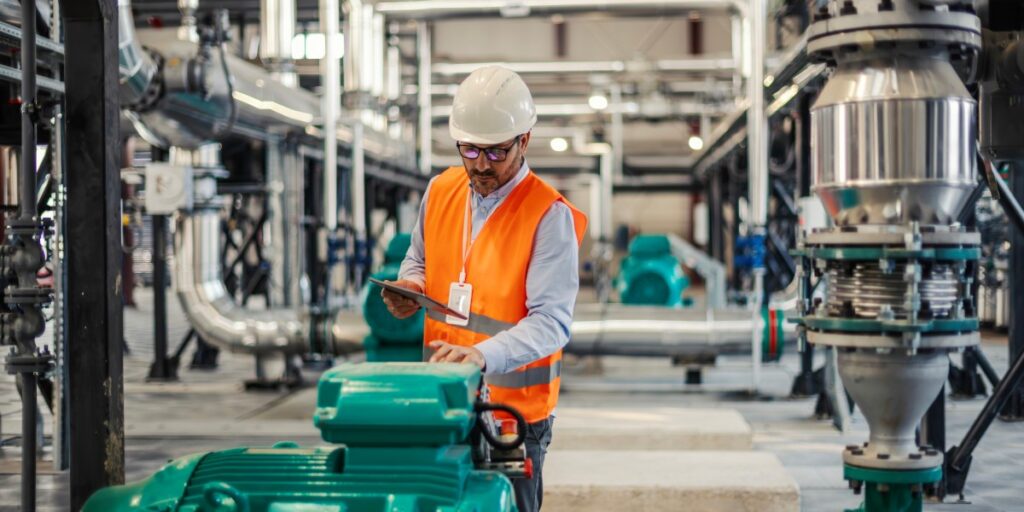
活的数字孪生正在帮助工厂更像活的系统一样运行,并为同步工作的行业奠定基础。
大多数人将工业环境与冷钢和发条机械联系起来。然而,从功能上讲,植物或工厂更像是一种生物:它有脉搏,甚至有新陈代谢。随着年龄的增长,它会经历磨损,健康状况恶化的迹象往往表现为几乎察觉不到的不规则现象。
数字孪生技术长期以来一直致力于反映这种可能是更大问题症状的动态和模型异常。但早期的实现仅落后于物理现实;它们无法进行实时分析,也无法主动解决检测到的任何问题。他们更侧重于模拟、观察和假设情景规划,而不是闭环执行。而不是充当数字镜像的角色,
人工智能是这一变化的核心。AVEVA首席产品官Rob McGreevy将新的人工智能数字孪生比作生长和进化的生物。这些“活”版本是工厂资产和流程的适应性常绿模型。由于它们与现场条件保持同步,并连接曾经孤立运行的系统,因此它们提供了以前缺少的可见性和编排层,更好地反映有机节奏…
现在,代理人工智能也使工业系统能够自行超越诊断或建议和行动。随着技术朝着更大的自主性发展,它开始发展出一种工业稳态的反应,在这种稳态中,小的、不断的调整可以保持工厂或工厂的健康和嗡嗡声。
尽管如此,人类的判断和操作员的监督仍然发挥着重要作用,它定义了健康的一开始是什么样子,并在人工智能系统脱节时发出警告。活生生的数字孪生为人类工程师提供了监控人工智能正在做什么并确保执行按计划进行的手段。
活生生的数字孪生体通过数字线程或资产的连接记录将工程和设计信息与实时运营数据联系起来,该记录贯穿其整个生命周期。一些显着的技术转变有助于将这一线索串联在一起:传感器(近年来变得更加经济实惠)现在从物联网设备和工业控制设备流式遥测,软件平台带来了这种信息……
运营商观看数字双胞胎的镜头反过来又进化了。McGreevy说: “您可以从可持续发展的角度来看待数字孪生:我的排放量是多少?” “或者,从维护的角度来看:该资产的表现是否健康?或者,通过性能指标:它是否产生了我需要的小部件数量?”
The next phase is letting AI act on select insights those lenses illuminate. For their part, manufacturers are eager for this chapter: In a 2026 Manufacturing Leadership Councilsurvey of manufacturers(opens in new tab), 66% said they are using or plan to use agentic AI in their operations, and 40% expect some degree of factory autonomy by 2030. At the same time, they’re wary of the potential risks: InDeloitte’s 2025 smart manufacturing survey(ope…
Source: MIT Technology Review Insights with data fromManufacturing Leadership Council(opens in new tab), 2026
“There is a lot more refinement to be done, a lot more proof points, testing, and validation needed,” McGreevy says about the ongoing process of making AI autonomous. In the near term, McGreevy expects agentic AI to follow the path seen in other industrial technologies like SCADA systems. “The ‘S’ in SCADA means supervisory, and supervisory means there’s a human in the middle,” he says. He sees AI working mostly in that advisory mode for the fore…
As for the role human operators play, the day-to-day is evolving. Workers who once specialized in a single process line or maintenance task can now take on multiple disciplines. They can spend less time and effort approving routine actions one by one, and more on defining acceptable operating limits. Because AI can reinforce patterns in the data it receives, catching missteps early is a core part of the job. Human knowledge and experience in inte…
Governance on a company- and industry-wide scale, too, needs to adapt to the times. Organizations must establish clear guardrails for which decisions AI can make on its own and how its actions are monitored and audited. Still, many have yet to set up comprehensive safeguards: In a recent study fromAVEVA and IMD(opens in new tab), 43% of organizations said AI has changed decision-making and accountability across ecosystem partners only slightly or…
In the meantime, regulators are starting to define some of the rules. The EU AI Act classifies certain AI safety components used in critical infrastructure as high-risk and imposes requirements for human oversight. Companies are setting up their own structures as well; AVEVA, for one, has a responsible AI governance board and a published set of principles for how AI is developed and deployed.
Inside the semi-autonomous systems already running, that oversight looks different from one deployment to another. In some cases, an operator approves every action; in others, AI acts on its own while people oversee and define the boundaries it can operate within. McGreevy cites several examples of what machine autonomy and human-plus-machine collaboration looks like among AVEVA customers:
The same synchronization that was once missing from individual plants’ technology systems has also been lacking on a larger scale. “Manufacturing and critical infrastructure have operated as siloed systems for the last 50 years,” says McGreevy. But certain emerging technologies, he suggests, are creating opportunities for more holistic coordination.
On an enterprise level, this might involve the integration of physical AI: systems that pair robotics and sensing technologies with AI-powered decision-making. Drones that fly over pipelines and power lines, for instance, can feed visual inspection data to algorithms that spot gas leaks and other hazards. Not only does this create a more accurate and interconnected flow of information, but it spares humans from needing to physically enter potenti…
A bigger-picture version extends beyond any one plant or process to entire industrial networks, something McGreevy dubs the “integrated value chain.” “Living digital twins make digital manifestations of the entire value chain possible,” he says. “This allows companies to react quickly to supply chain changes, demand changes, tariffs, and material availability.”
Amid today’s realities of turbulent geopolitics and shifting regulatory demands, such resilience will be “an absolute necessity,” adds McGreevy. “Without it, it will be very hard to run an effective business.”