This is today’s edition ofThe Download,our weekday newsletter that provides a daily dose of what’s going on in the world of technology.
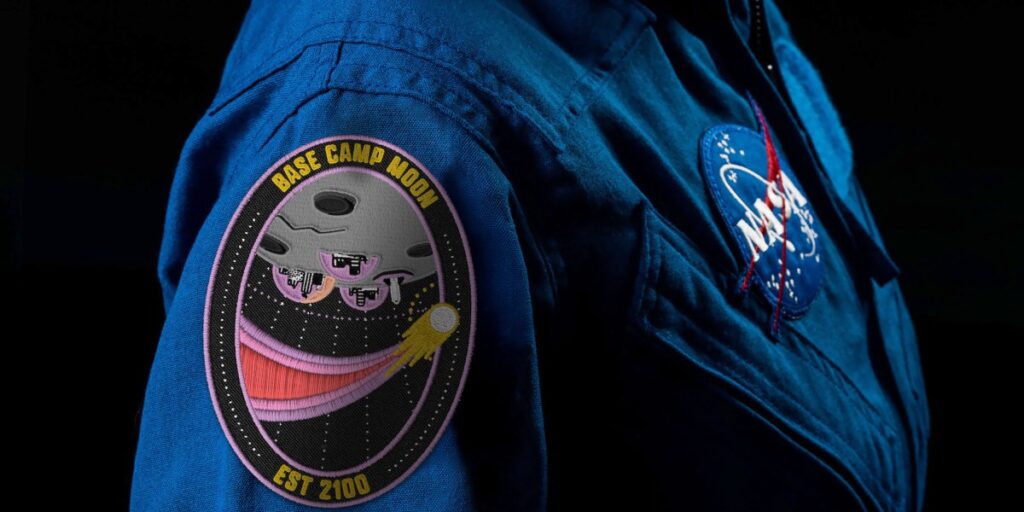
The US and China are racing to build bases on the moon, with NASA hoping to establish a small lunar city by the end of the century. But the moon is a tremendously hostile place to set up camp.
A sprawling lunar base must be safe for its inhabitants, protected from falling asteroids, endless cosmic radiation, razor-sharp lunar dust, and torturous temperature swings. It also must be somewhat self-sustaining.
That will require autonomous robots, nuclear power, and a way to use the moon’s resources to keep the base operating. But the chief obstacle may be one of political will.
Thisstoryis from the next issue of our print magazine.Subscribe nowto get your hands on a copy as soon as it lands on Wednesday 21 October!
Brimstone is one ofMIT Technology Review’s10 Climate Tech Companies to Watch 2026, availableexclusively to subscribers.
Brimstone is a code-switching climate tech company for these polarized political times. The US startup is part green cement company, part critical mineral producer.
During the Biden administration, its primary pitch was cement that generates about 60% fewer greenhouse-gas emissions. It achieves this by switching to silicate rocks instead of standard limestone, which releases carbon dioxide when heated.
Under the Trump administration, however, the company is emphasizing another benefit of its process: the ability to extract valuable materials from those same rocks.
Subscriberscan now access the full10 Climate Tech Companies to Watch, spanningeverything from geothermal power plants tosmart turbinesand semi-solid-state cells.
The moment Trevor Wischnewsky heard that drones were delivering pizza and sushi around his Texas neighborhood, his mind was made up. “It was super fascinating,” he says. “I just immediately wanted to be a part of it.”
Wischnewsky is now an RPIC, or remote pilot in command, at a company called FlyTrex. An RPIC is like an air traffic controller. But instead of airplanes, they oversee fleets of drones that ferry cargo to homes and businesses
I’ve combed the internet to find you today’s most fun/important/scary/fascinating stories about technology.
1 An Anthropic AI model submitted a fake tip about an unsolved murderThe tip was in a new group of rogue actions Anthropic disclosed. (NYT$)+ Police criticised the company for waiting nine days to report it after finding it.(WSJ$)+ Another model submitted real government forms.(Quartz)+ The White House has made AI incident reporting mandatory.(Axios)+ But who’s liable when AI agents go rogue?(MIT Technology Review)
2 Ukraine’s drone strikes have dealt a major blow to Russian AISunday’s attack shut down the third Yandex data centre hit in days. (Reuters$)+ The strikes have disrupted Russia’s AI, cloud services, and apps.(Gizmodo)+ They followed Russian strikes on Ukrainian data centers.(Ars Technica)+ Russian military satellites could disrupt Starlink.(Reuters$)+ Ukraine’s drone data is fueling a wild market.(MIT Technology Review)
3 Iranian ChatGPT users have planted AI-generated articles in news outletsAbout a dozen outlets ran roughly 100 articles by fake journalists. (CNN)+ The articles criticised the Iran war’s effects on Americans.(WP$)+ AI has been used to turn the Iran conflict into theatre.(MIT Technology Review)
4 Tesla has renamed “Full Self-Driving” as “Assisted Driving” in EuropeEU lawmakers said the old name was misleading. (TechCrunch)+ Tesla hopes the rebrand leads regulators to approve the feature.(Wired$)+ Back in the US, it plans to increase toxic emissions near a school.(SFGate)
5 A ransomware negotiator has been arrested amid a hacking crackdownThe FBI suspects he was involved with a gang that recently claimed to have stolen data on the bureau’s employees. (Reuters$)+ AI is making online crimes easier.(MIT Technology Review)
6 Hollywood’s hottest villain right now is the tech billionaireFour new films feature dark depictions of Silicon Valley leaders. (Axios$)+ The real Mark Zuckerberg has also become a new character.(NYT$)
7 A new experiment is testing the Amazon’s response to rising CO₂CO₂-releasing towers will simulate future atmospheric conditions. (Nature)+ Is carbon removal in trouble?(MIT Technology Review)
8 The US hybrid boom has pushed some used car prices above new onesBuyers are paying a premium to skip the wait for new models. (Wired$)
9 A new technology switches tattoos on and off with lightIt can make permanent ink invisible. (New Scientist$)
10 Scientists spotted the most distant signal yet from the ancient universeIt could help them understand how the universe has evolved. (404 Media)
—Microsoft’s president, Brad Smith,tells the BBCwhy AI urgently needs more regulations, including requiring firms to write “incident reports” and tell victims if the technology goes rogue.
Geoffrey Hinton is a pioneer of deep learning who helped develop some of the most important techniques at the heart of modern artificial intelligence, but after a decade at Google, he’s stepped down to focus on concerns he now has about AI.
Hinton is now spending his time on what he describes as “more philosophical work.” And that will focus on the small but—to him—very real danger that AI will turn out to be a disaster.Here’s why he’s so worried.
A place for comfort, fun, and distraction to brighten up your day. (Got any ideas?Drop me a line.)
+ A doting blind cat has beenfollowing his ownereverywhere like a little duckling.+Eigendrumlets you draw any shape and hear what it would sound like as a real drum.+ Build your perfect background soundscapewith Ambient Mixer, from rainy forests to cozy cafés.+ Meet Momota, the polar bear cub who’s turning traffic cones into anunlikely fashion statement.